
Quartz, Quartzite, Granite, Porcelain, and Butcher Block: Countertops for How You Actually Live
Mauro compares quartz, quartzite, granite, porcelain, butcher block, and marble through the lens of real family use, maintenance, aesthetics, and remodeling value.
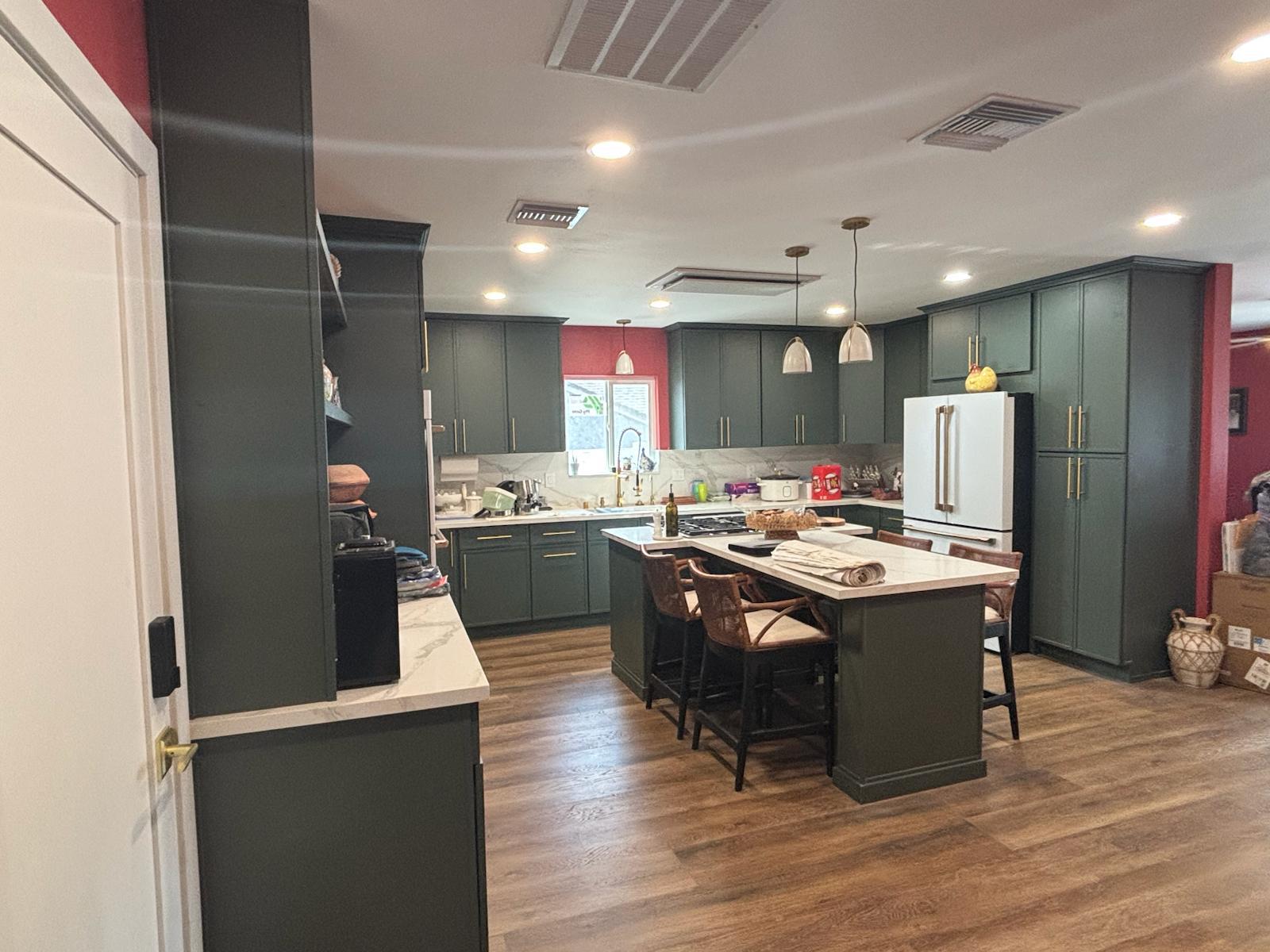
Countertops are one of the most emotional decisions in a remodel. Homeowners touch them, clean them, lean on them, cook on them, photograph them, and stare at samples for weeks. I understand why. A countertop changes the entire feel of a kitchen or bathroom faster than almost anything else.
But this is also where people can get pulled away from common sense. They fall in love with a slab, then only later ask the questions that matter: Does it stain? Does it need sealing? Can I set a hot pan on it? Will it chip around the sink? Is it going to feel high-maintenance after the first month of excitement wears off?
When I help clients compare countertop materials, I try to bring the conversation back to lifestyle. Are you a careful cook or a busy family that moves fast? Do you want a dramatic natural look or a cleaner, more controlled pattern? Are you the kind of person who will reseal stone when it needs it, or do you want a material that quietly asks for almost nothing?
That is how the right material reveals itself.
Quartz: the easiest “yes” for many families
If there is one countertop category that solves the most problems for the most homeowners, it is quartz. Good quartz is popular for a reason. It is consistent, low-maintenance, nonporous, and easy to live with. For busy kitchens in Orange County and coastal Southern California homes, that combination is hard to ignore.
Why homeowners love quartz:
- no routine sealing
- easy everyday care
- wide design range
- clean, controlled look
- good stain resistance
Where quartz fits best:
- family kitchens
- bathroom vanities
- remodels where maintenance needs to stay low
- homes where the owner wants a polished, updated look without a lot of material drama
The main thing I remind people is that “easy” does not mean indestructible. Quartz still deserves trivets for very hot cookware, and edge impact can still chip any surface if life hits it in the wrong way. But for households that want beauty with less stress, quartz is often the safest recommendation.
Quartzite: gorgeous, natural, and worth understanding before you buy
Quartzite gets a lot of attention because it often gives homeowners the natural veining they love with more durability than softer stones like marble. I understand the appeal. A beautiful quartzite slab can absolutely stop you in your tracks.
But quartzite is not the same as quartz, and that confusion causes problems. Quartzite is a natural stone. That means:
- variation is part of the beauty
- maintenance matters more
- sealing may be part of ownership
- each slab is its own thing
Who tends to love quartzite:
- homeowners who really value natural movement and uniqueness
- people who want an elevated, organic look
- clients who are comfortable with a little more care in exchange for that beauty
What I always explain:
- if you want a countertop that behaves like a true low-maintenance appliance surface, quartz may be the better fit
- if you want the richness of natural stone and are willing to own it like natural stone, quartzite can be fantastic
Granite: still relevant, still smart in many kitchens
Granite got so popular for so long that some homeowners now overlook it because they think it feels dated. I think that is a mistake. The right granite still looks beautiful, performs very well, and can be a smart long-term choice.
What I like about granite:
- strong natural durability
- broad range of looks
- often better heat confidence than quartz in daily use
- solid fit for homeowners who want natural stone without the softness of marble
Things to understand:
- some granites benefit from sealing
- slab choice matters a lot
- color and movement trends come and go, so selection should feel intentional, not generic
In practical terms, granite still makes sense for homeowners who want real stone and are comfortable with basic maintenance expectations.
Porcelain slab countertops: sleek, modern, and increasingly interesting
Porcelain countertops are getting more attention, especially in modern designs. They can look clean, sophisticated, and architectural. Many homeowners love them for that reason alone.
Why they are appealing:
- contemporary look
- low porosity
- strong resistance to staining
- good fit for modern kitchens and integrated design details
Where I get more careful:
- fabrication quality matters
- edge details matter
- installer experience matters
- not every fabricator handles porcelain with the same comfort level
Porcelain can be a very smart choice when the design direction is contemporary and the right team is involved. It is not the default answer for every kitchen, but it deserves serious consideration.
Butcher block: warm, inviting, and not for everyone
Butcher block brings warmth that stone and engineered surfaces do not. It can make a kitchen feel softer, more approachable, and more lived-in. On certain homes, especially where the goal is warmth rather than ultra-polish, it can be charming.
But I am honest about butcher block:
- it requires ongoing care
- it can mark, dent, and change over time
- water around sinks needs attention
- some homeowners love that patina and some absolutely do not
Where I like it best:
- accent applications
- islands
- homeowners who enjoy the lived-in character of wood
- kitchens where the material story matters as much as the maintenance story
If someone wants effortless upkeep, butcher block is not the right match. If they want warmth and accept that it will age like wood, it can be wonderful.
Marble: beautiful, but know yourself first
Even though it was not the first material on your list, I always mention marble because people fall in love with it visually. I never want to sell a homeowner on marble without also saying the quiet part out loud: it is beautiful and it is more vulnerable.
Marble can etch, stain, and show wear. Some people adore that soft patina and think it makes the home feel storied and real. Others feel disappointed the first time citrus or wine leaves a mark.
Marble is not wrong. It is just honest. The homeowner has to be honest too.
Lifestyle matters more than the slab yard excitement
This is the question I ask that changes everything: How do you actually use your kitchen?
If the answer is:
- lots of family cooking
- little kids helping
- fast weeknights
- hot pans moving around
- low tolerance for fussy care
Then quartz or a carefully chosen granite usually rises to the top.
If the answer is:
- design matters deeply
- natural stone is part of the dream
- the kitchen is used carefully
- maintenance is acceptable
Then quartzite, granite, or even marble may stay in the running depending on the look they want.
If the answer is:
- modern, minimal, integrated, statement-making
Then porcelain becomes especially interesting.
My everyday guidance by homeowner type
Busy family household
Quartz first. Granite second.
Design-forward homeowner who loves natural stone
Quartzite or granite depending on the exact visual goal.
Warm, character-filled kitchen
Butcher block in the right location, sometimes paired with another material.
Modern remodel
Quartz or porcelain, depending on the lines and details of the design.
Bathroom vanity
Quartz is extremely hard to argue against. Easy care matters there too.
Care expectations homeowners should hear before they buy
Quartz:
- easy care
- no routine sealing
- avoid extreme direct heat without protection
Quartzite and granite:
- understand sealing expectations
- use cutting boards and wipe spills promptly
- enjoy the natural variation instead of fighting it
Butcher block:
- expect maintenance
- respect water exposure
- embrace aging rather than demanding perfection
Porcelain:
- care is usually straightforward, but fabrication and edge detailing deserve real attention
Pricing without getting fake-precise
Countertops move through wide pricing lanes because slab selection, edge details, sink choices, backsplash choices, and fabrication complexity all matter.
The broad conversation usually looks like this:
- quartz gives many homeowners the best balance of aesthetics, care, and predictable value
- granite and quartzite can move from sensible to premium depending on selection
- porcelain can become premium quickly depending on fabrication and detailing
- butcher block may look approachable at first, but maintenance expectations are part of the real cost
My final advice
Choose countertops based on the life happening around them, not just the light in the showroom. The right countertop is the one you still appreciate after the remodel is no longer new—when dinner is rushed, the sink is full, the family is leaning on the island, and nobody has time to perform for the kitchen.
That is why quartz wins so many real-world decisions. It is not always the most romantic answer, but it is often the most practical beautiful one. And when a homeowner really wants the character of natural stone, that can be a great decision too—as long as they are choosing with open eyes.