
LVP vs. Laminate in Real Southern California Homes: What I Tell Families
A practical, family-first comparison of LVP and laminate for Orange County and coastal Southern California homes, with advice based on kids, pets, sand, moisture, and daily life.
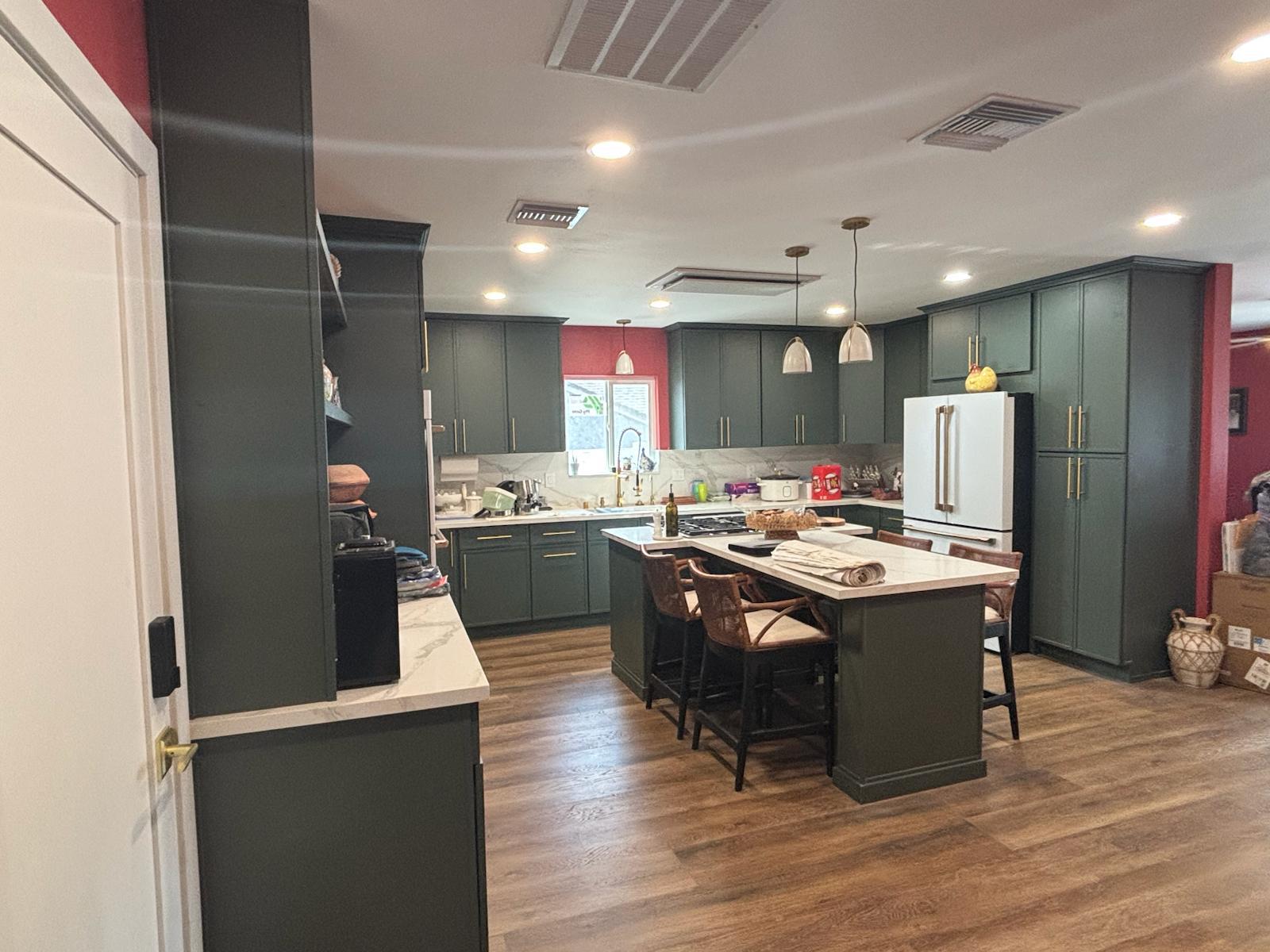
When homeowners ask me whether they should choose LVP or laminate, they are usually hoping for a fast answer. I understand that. Flooring decisions get overwhelming quickly because the samples all look beautiful in the showroom. But once I hear how the home is actually used, the answer usually gets much clearer.
I think about this one a lot because I live in the same kind of real world our clients do. We have shoes coming in, groceries getting dragged across the floor, a teenage daughter who can somehow be careful and messy at the same time, and all the everyday traffic that makes a product either feel easy or feel like a constant chore. Add Southern California living to that mix—sand from the beach, dry heat inland, occasional humidity near the coast, pets, kids, and open-plan living spaces—and suddenly the “best” floor depends very much on lifestyle.
The two products get compared constantly online, and for good reason. They often sit in a similar budget conversation. They are both made to mimic wood. They both promise durability. But they are not the same product, and I think homeowners do themselves a favor when they stop treating them like interchangeable twins.
What is the real difference?
The simplest way I explain it is this.
Luxury vinyl plank, or LVP, has a synthetic core. That is why people love it in homes where spills, wet shoes, pet accidents, mopping, and busy kitchens are part of daily life. It is more forgiving when moisture is part of the picture.
Laminate has a wood-fiber-based core. That is why many people still like it for its feel, visual realism, and often stronger scratch resistance at the surface. Good laminate is much better than the cheap versions people remember from years ago, but moisture is still the line I watch closely.
So the decision is usually not “Which is better in general?” It is “Which is better for this room, this family, this subfloor, and this climate?”
Where LVP usually wins in our market
For a lot of homes in Orange County and coastal areas like Oceanside, LVP wins because real life is wet more often than people admit. Not flooded-wet. Daily-life wet. Damp towels. Dog bowls. Mopped kitchens. Sandy feet. Open patio doors. A child grabbing water from the fridge and not noticing the puddle. That is where LVP earns its reputation.
I especially like LVP for:
- kitchens
- family rooms that open to backyards
- first floors with a lot of traffic
- beach-near homes where sand and moisture come in often
- homes with pets or younger kids
- households that want lower stress maintenance
If I were helping a family in Oceanside, Dana Point, or San Clemente who likes to come home from the beach and keep living without policing every footstep, I would usually lean LVP first and ask questions second.
Where laminate still deserves respect
Laminate is not the outdated loser of the conversation. Good laminate can look excellent, feel more like wood underfoot to some homeowners, and hold up beautifully in dry spaces. In fact, if someone told me they wanted flooring in a bedroom-heavy project in Lake Forest or Irvine, with no pets, no beach traffic, and they care a lot about a realistic wood appearance, laminate would absolutely stay on the table.
Laminate can be a strong choice for:
- bedrooms
- quieter living spaces
- second floors without wet-zone exposure
- homeowners who care a lot about surface scratch resistance
- projects where the look and feel of wood matter more than waterproofing
I have seen laminate look fantastic in the right house. The problem is not laminate itself. The problem is choosing it for a space that behaves like a mudroom.
The Southern California factor nobody should ignore
Our clients do not live in a vacuum. Even if your home is not right on the water, our region has a mix of beach moisture, marine layer, long dry seasons, and hot sun. That matters.
Coastal and near-coastal homes:
- can see more moisture tracked inside
- often keep doors and windows open more
- deal with sand, damp air, and lifestyle traffic
Inland homes:
- may be drier overall
- can get hotter, which makes product quality and installation details important
- often still have kitchens and family rooms that function like wet zones because that is just how families live
This is why I do not love one-size-fits-all advice. A laminate floor in a quiet upstairs bedroom suite may be a wonderful decision. The same product in a heavily used kitchen with dogs and a slider to the patio may become a regret story.
What homeowners usually ask next: “But which one lasts longer?”
My answer is always: the better-installed floor in the right environment.
That may sound evasive, but it is true. Cheap LVP can disappoint. Cheap laminate can disappoint. A premium product installed over a bad subfloor can disappoint. A great floor chosen for the wrong room can disappoint.
I focus on these practical questions:
- How flat is the subfloor?
- Will this area see daily moisture or only occasional spills?
- Are there dogs with nails, rolling chairs, or heavy furniture?
- Is comfort underfoot important?
- Does the homeowner want the easiest maintenance, or the most wood-like look?
One thing homeowners miss is that subfloor prep matters tremendously. If the base is not flat enough, the locking system can suffer, noise can increase, and wear can show up in ways people blame on the product when the real issue was preparation.
What I usually recommend by room
For kitchens: LVP most of the time.
For bathrooms and laundry areas: LVP or tile. I generally would not make laminate my first suggestion here.
For bedrooms: LVP or laminate can both work. This is where design preference and comfort often take over.
For whole-house remodels: I ask how the home is used. If it is a busy family house with indoor-outdoor traffic, LVP often makes the most sense. If it is a more controlled environment and the homeowners want a particular visual feel, laminate can absolutely win.
For rentals or resale-focused projects: I look at durability, ease of replacement, and how forgiving the floor will be to the next owner’s habits.
The part nobody talks about enough: sound and feel
This is where showroom decisions can go wrong. A floor can look perfect in a hand sample and feel completely wrong once it is installed throughout the home.
Some homeowners think laminate feels more solid. Others prefer the softer feel of LVP. Some people hate the click-clack sound of one product and do not notice it at all with another. This is one reason I always encourage clients to think beyond color and plank width. Ask how you want the room to feel at 7 a.m. barefoot, not just how it photographs.
With our teenage daughter, I can tell you this much: the family usually stops noticing the exact shade after a month, but they absolutely keep noticing if the floor is noisy, slippery, or stressful to maintain.
My honest pricing framework
Instead of promising exact numbers, I like to frame these as budget lanes.
Laminate can look attractive at the lower-to-middle budget conversation, especially in dry rooms.
LVP often earns its value because it solves more daily-life problems, especially in active homes.
At the premium end, both categories improve—but the homeowner still needs to choose based on room use, not just the price tag. Spending more on the wrong category is still spending wrong.
My practical advice if you are torn
Choose LVP when:
- moisture is part of normal life
- you have pets, kids, or beach traffic
- you want lower-stress upkeep
- the room is a kitchen, family room, or anything near a patio
Choose laminate when:
- the room stays dry
- you want a very wood-like look and feel
- scratch resistance is a top concern
- the project is bedroom-focused or a quieter upstairs environment
And if you are still stuck, ask yourself one question: “What kind of messes happen here when nobody is trying to be careful?” That question usually answers the flooring question faster than any product brochure.
For many Southern California families, LVP ends up being the easier yes. But laminate absolutely still has a place. The smart choice is the one that matches how you live, not how you imagine yourself living after the remodel is done.